

In our recent webinar, “Unpacking the World’s Simplest Brands in B2B”, Siegel+Gale’s Analytics & Insights leads, Marc Desmond and Ben Osborne explored what the research means for businesses, with examples of simplicity in practice.
Here are five takeaways from the conversation.
B2B buyers face sophisticated offerings, changing technology, and complex decisions that involve multiple stakeholders. Brands can add to that work when their portfolios are hard to navigate, their claims sound interchangeable, or their promises lack evidence.
The simplest B2B brands help buyers make sense of those decisions. They make it easier to find a relevant offering, understand what sets it apart, and feel confident choosing it.
Our World’s Simplest Brands: B2B Edition research explores the advantages of simplicity and the branding elements that drive it. We surveyed more than 2,000 B2B decision-makers across the US and UK and evaluated 80 brands across financial services, technology, industrials, and healthcare (healthcare was studied in the US only).
The findings show a strong relationship between simplicity and customer confidence. Simpler brands are 51% more likely to be trusted to do the right thing, 65% more likely to receive the benefit of the doubt during a crisis and 67% more desirable to do business with.
What can businesses do with those findings? Drawing on the research, Siegel+Gale’s Marc Desmond and Ben Osborne explored five practical takeaways. The brand examples below illustrate those lessons in action, rather than establish what caused any individual brand’s research results.
1. Organize offerings around customer needs
B2B portfolios often grow through acquisitions and new capabilities. Over time, their structure can reflect the history of the business more clearly than the needs of its customers. Buyers must then work out which division, product, or service can help them.
Simplifying that experience requires deliberate choices about how offerings fit together and how customers find their way into them.
HPE illustrates the scale of that challenge. Its portfolio included 33 brands and approximately 2,500 product names. Products crossed categories, and business units followed different naming conventions. The structure made it harder for customers to understand the breadth of HPE’s capabilities.
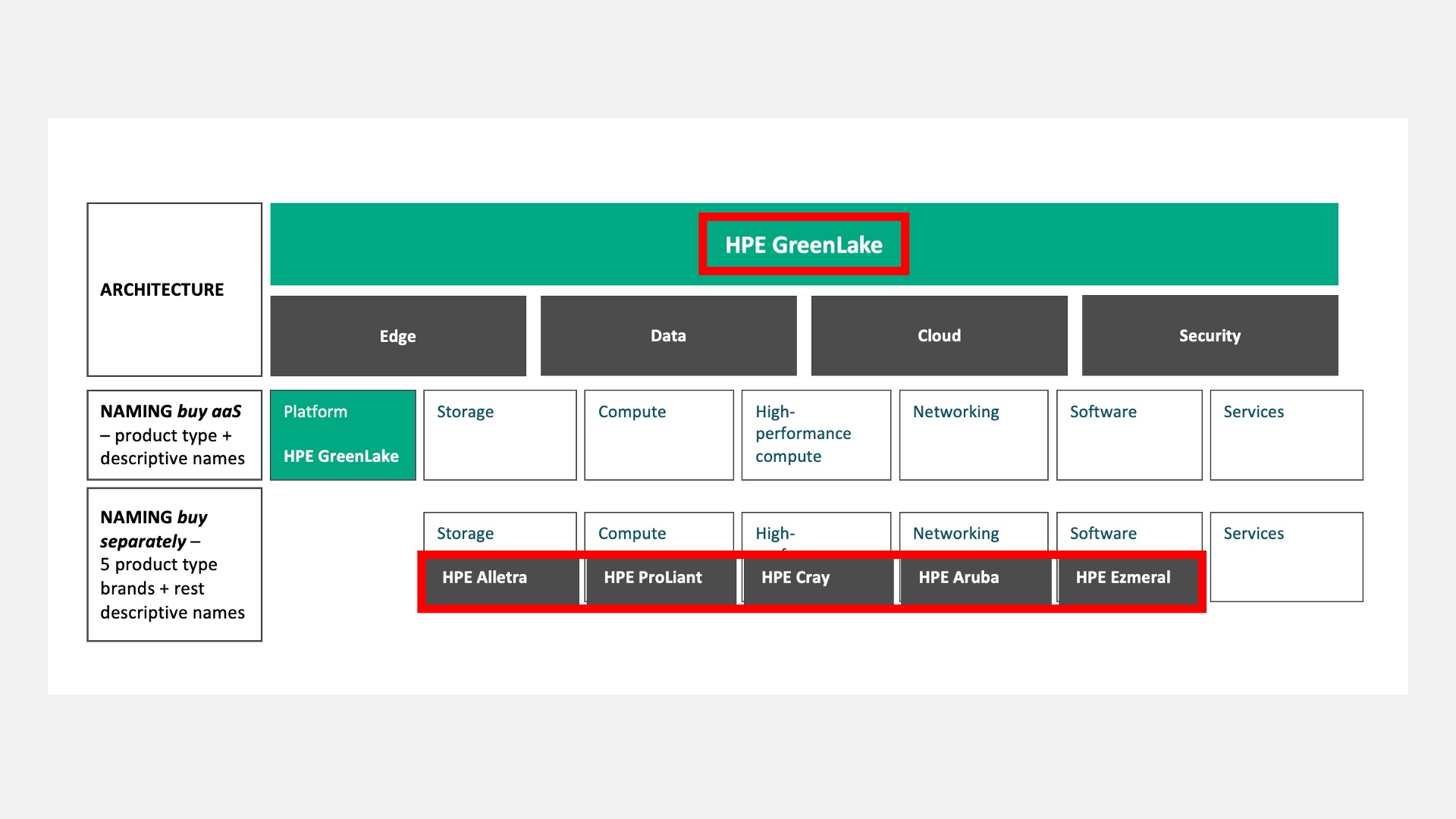
Siegel+Gale worked with HPE to establish a clearer architecture, grounded in research into customer buying needs. Edge, Data, Cloud and Security provided clearer routes into the offering. HPE reduced its key brands from 33 to six, retaining selected product brands while introducing clearer descriptive naming and a common process for naming future offerings.
The organizing idea carried through to the names and descriptions customers encountered.
For businesses with broad portfolios, the starting point is what customers need to accomplish. The structure should help them identify a relevant solution and understand how it connects to the wider offering.
Ask your team: Can customers find what they need without having to understand how our business is organized?
2. Choose a direction and express it with conviction
A clear direction helps customers connect the dots. It explains where a business is headed and gives people a basis for deciding whether that direction matters to them.
The research highlights its importance across industries. Clear direction ranks as the top simplicity driver for industrials and health systems, second for technology, and third for payer brands.
Microsoft Azure provides an example of how to make direction concrete. European cloud buyers face complex questions about data control, sovereignty, and accountability. They need to understand what a provider’s commitments mean for their business.
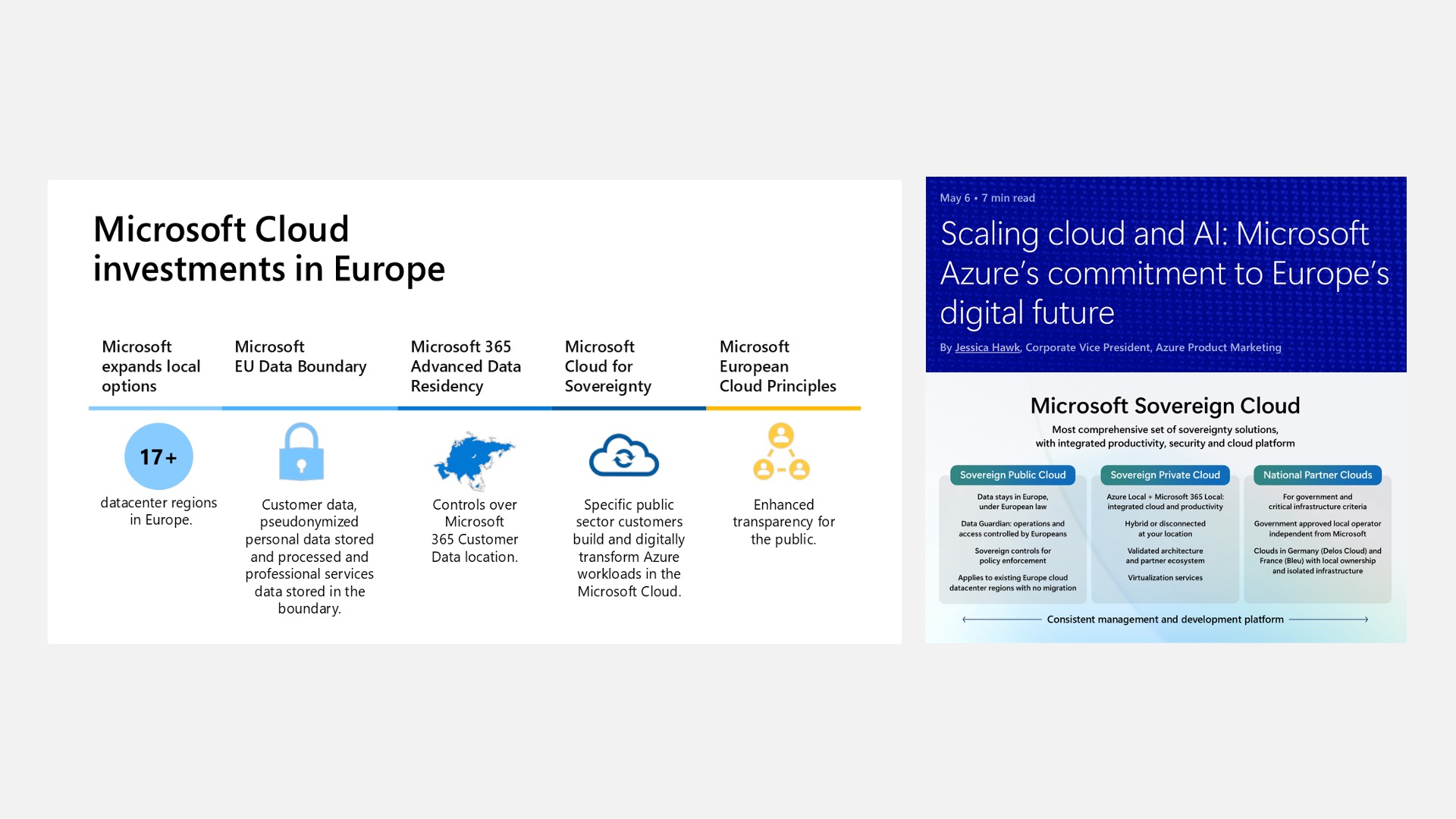
Microsoft’s EU Data Boundary and European Digital Commitments address those concerns by explaining where data sits, who controls it, and how it is protected. Those commitments give customers something specific to evaluate.
The lesson extends beyond cloud infrastructure. A statement of ambition becomes more useful when customers can see the commitments behind it and understand their implications.
Ask your team: Are we clear about what we stand for, and do our actions demonstrate it?
3. Make distinctiveness unmistakable
When brands describe themselves in similar ways, customers have to work harder to distinguish their options. A recognizable voice or visual identity gives them something clearer to identify and remember.
Distinctiveness features prominently in the research. “Sounds distinct” ranks first among technology simplicity drivers. In financial services, three of the top five drivers concern how a brand distinguishes itself.
PNC shows how a familiar category strength can take on a distinctive expression. Dependability matters to business leaders choosing a banking partner, particularly when they need support through changing economic conditions. But promises of stability can sound similar across providers.

PNC’s “Brilliantly Boring” platform gives that strength a memorable expression. Its corporate banking page connects the platform to consistent results through economic cycles, making the broader brand idea relevant to a specific business concern.
The example shows how a brand can make an established strength easier to recognize. The expression works because it gives customers a clear way to understand PNC’s point of view.
Ask your team: What makes us recognizably different, and does that come through in how people experience us?
4. Build trust by making promises credible
High-stakes decisions require confidence. Customers need reasons to believe that a provider will deliver, particularly when they are entrusting it with an important business function.
AWS’s work with Netflix illustrates how demonstrated performance can make a promise credible.
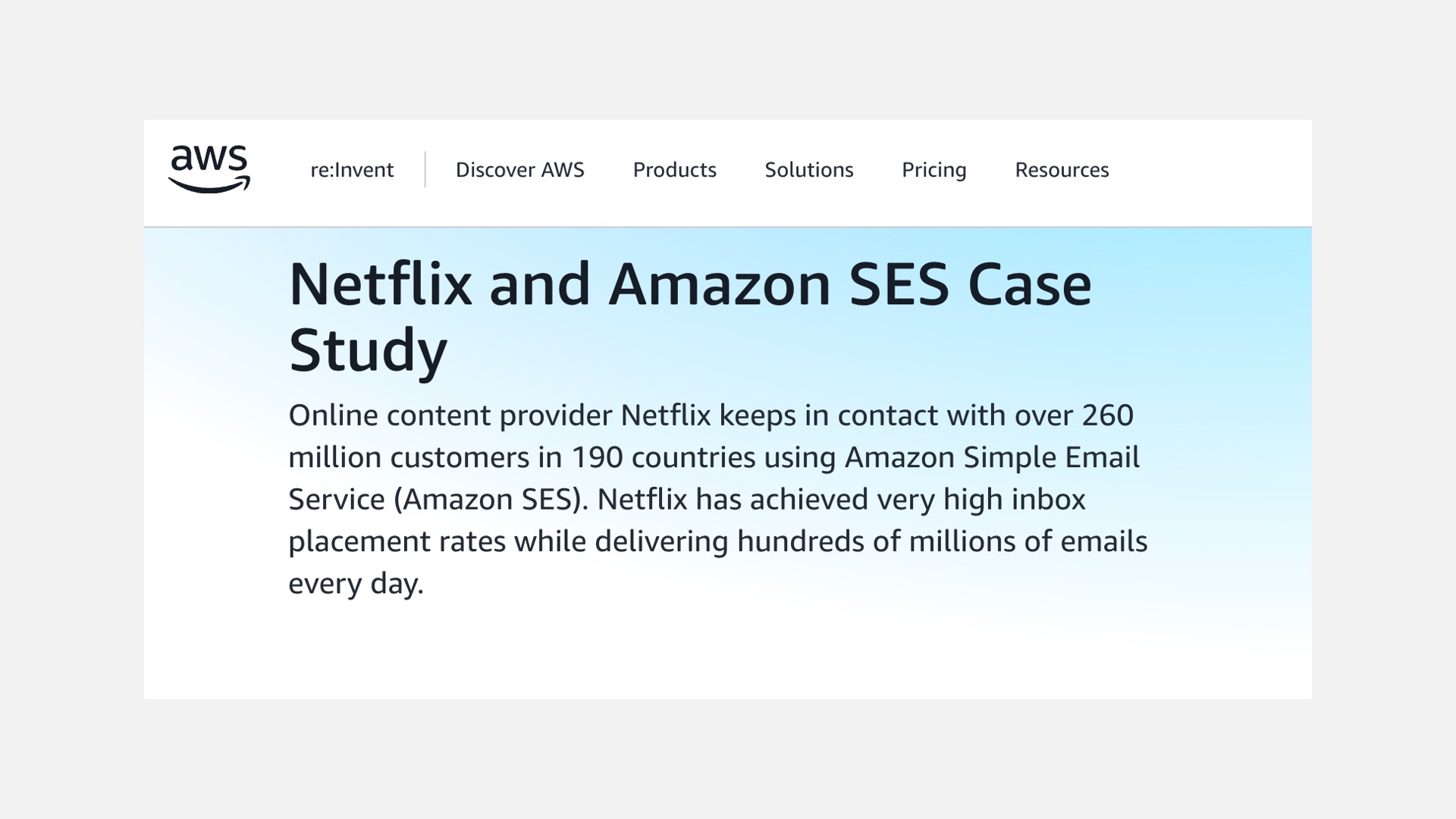
Before moving its email sending to Amazon Simple Email Service, Netflix needed confidence that the service could perform at scale. It tested AWS through repeated rounds of sending and evaluation. Third-party analysis found inbox placement above 99%, and Netflix ultimately migrated all its email sending to the service.
The process gave Netflix evidence it could assess before increasing its reliance on an external provider. Reliability became something the customer could evaluate through performance.
Familiarity can also support confidence. Another example is Schneider Electric, which carries a shared visual language across products and digital interfaces. Consistent meanings help people build on what they already understand as they move between applications.
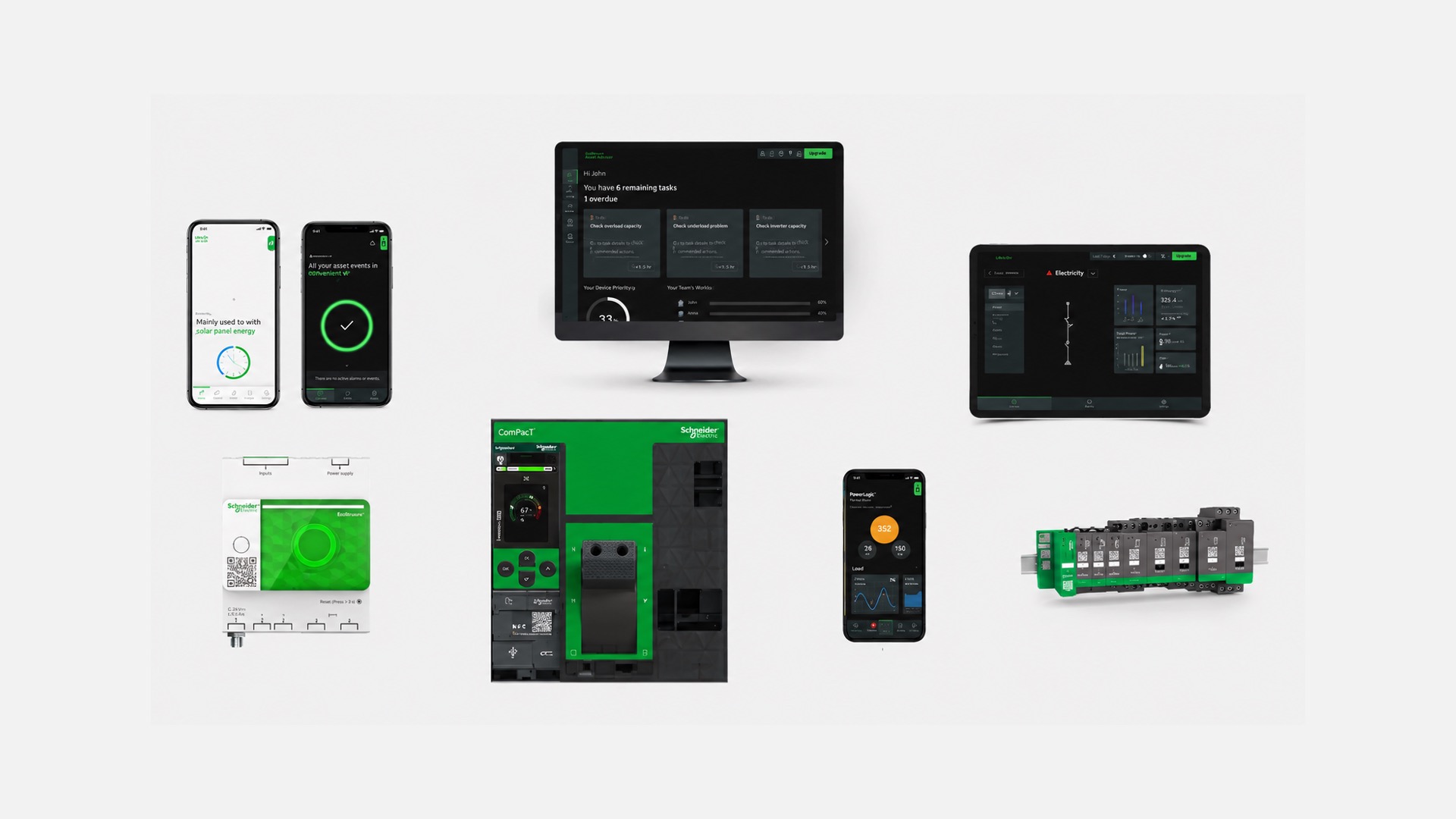
Both examples point to the importance of giving customers reasons to believe. Evidence of delivery and predictable experiences can help make a brand’s promises more credible.
Ask your team: What gives customers confidence that we’ll deliver on our promises?
5. Recognize that B2B buyers are consumers, too
People encounter brands through more than their professional roles. They may interact with the same organization as a consumer, a patient, or a business decision-maker, bringing different needs to each experience.
The research did not directly measure how consumer expectations transfer into business decisions. But the ease and clarity people value in everyday experiences offer a useful standard for B2B brands.
PayPal illustrates that principle. Its business customers need to send payments, collect money, and manage accounts alongside the other demands of running a business.
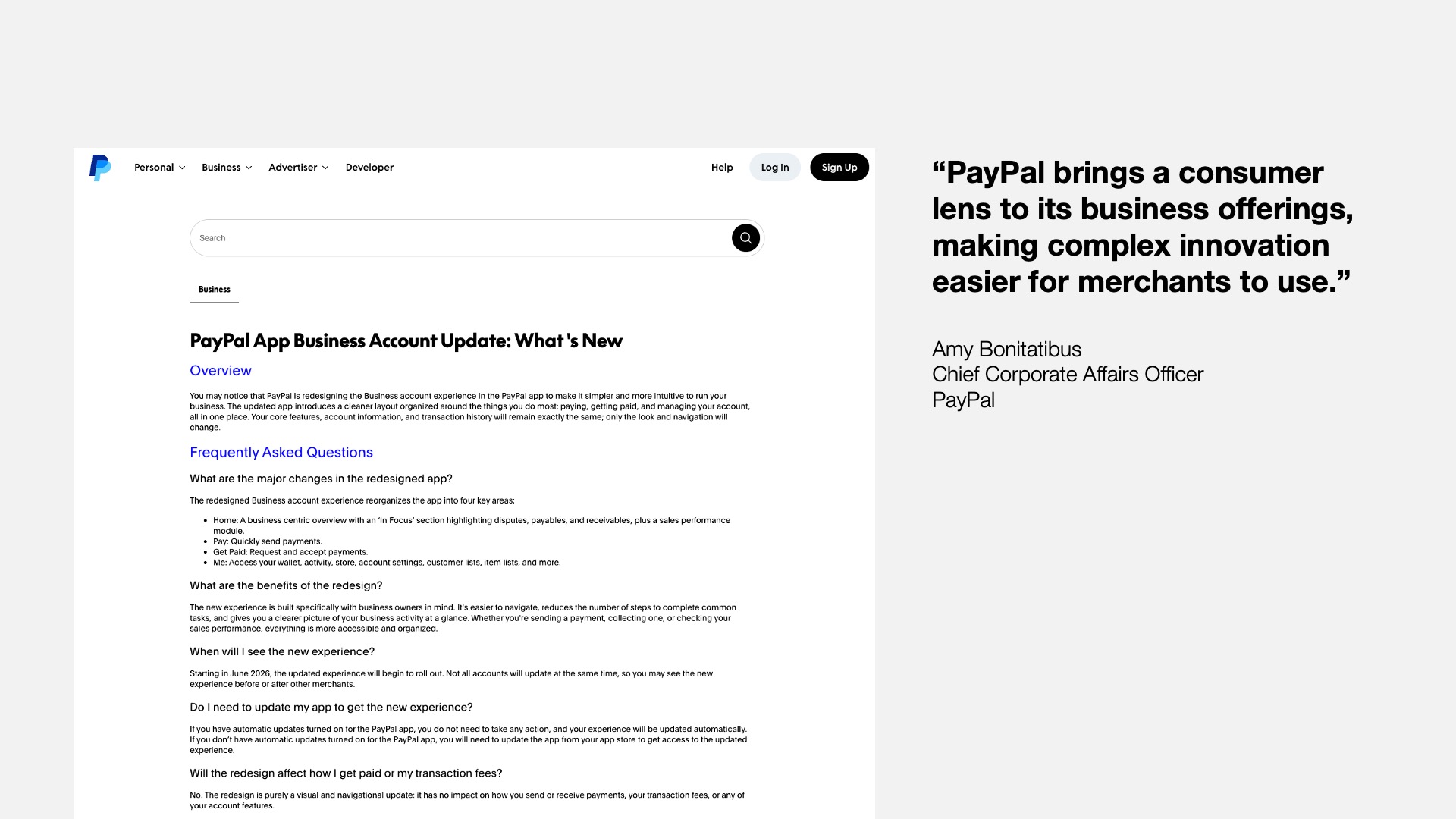
PayPal reorganized its business-account app around four recognizable destinations: Home, Pay, Get Paid and Me. Those labels give users a straightforward route to common tasks, with business-specific information such as sales performance and outstanding payments sitting within that structure. PayPal describes the redesign as reducing the steps required for common tasks.
The experience reflects the sophistication of business needs while using familiar language to help people navigate them.
For B2B brands, this offers a useful question: where could familiar interactions make a complex offering easier to use?
Ask your team: Does working with us feel as intuitive as the consumer experiences our buyers are used to?
Where is your brand asking customers to do too much work?
Simplicity needs customer context. The challenge of navigating a technology portfolio differs from choosing a financial services provider or evaluating a healthcare organization.
These five lessons offer starting points for understanding that challenge. A clearer portfolio can help customers find the right solution. A clear direction and distinctive expression can make their options easier to assess. Credible promises and intuitive experiences can give them confidence to take the next step.
Start by identifying where customers have to work hardest to understand your business. What do they need to know, find or believe, and how could your brand make that easier?
Explore the full report by visiting worldssimplestbrands.com.